
News
Your Post-Brexit Passport Questions Answered: Expiry Dates, Dual Nationality, and the New EU Rules
View of an airplane wing at an airport with jet bridges and service vehicles under a cloudy sky.
Article content
The Three-Month Rule That Catches Thousands
Eight years after the vote to leave the European Union, thousands of British travellers continue to lose their summer holidays due to inadvertent breaches of the post-Brexit passport rules. The most common pitfall is the so-called "three-month rule."
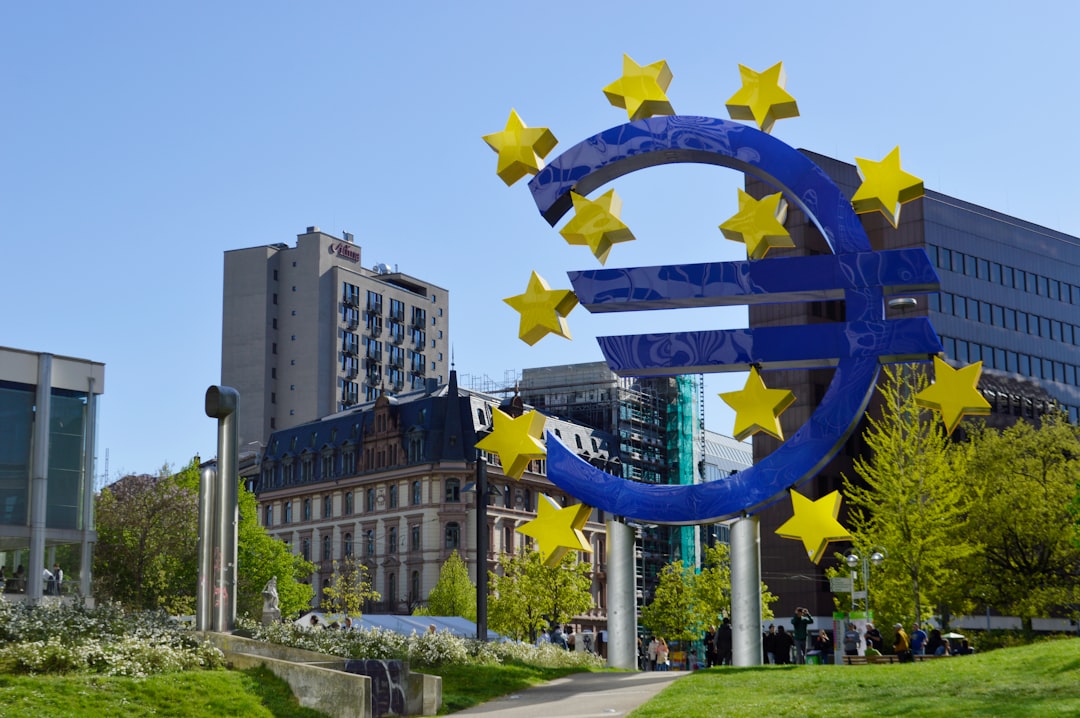 Photo by Farah Almazouni on Unsplash
To enter the Schengen Area, your UK passport must be valid for at least three months beyond your planned departure date from the EU. A passport that expires even a few days short of this requirement will see you turned away at check-in or the border.
If you discover your passport is too close to expiry, your options are limited:
- Apply immediately online for a renewal and send off the old passport by special delivery
- Hope for fast processing -- standard renewals often arrive well before the stated 10-week estimate
- Ask your holiday company if the dates can be shifted by a week or two
- Transfer the holiday to someone else, for a fee, if it is a package booking
The Irish Passport Advantage
In terms of documentation and ease of travel, the people in the strongest post-Brexit position are those with Irish passports. The advantages are significant:
 Photo by Wayne Jackson on Pexels
- No ETA required for entering the UK, thanks to the Common Travel Agreement
- Fast-track Schengen entry as EU citizens, bypassing the longer third-country queues
- No biometric checks when the entry-exit system launches
- No ETIAS permit required
- No 90-day rule -- as EU citizens, they can live and work freely across the bloc
It is entirely possible to be a UK citizen and an Irish passport holder simultaneously. Those who qualify for Irish citizenship through birth or ancestry have a powerful tool for navigating the post-Brexit landscape.
Dual Passport Strategy: The Smart Approach
For those holding both a UK and an EU passport (French, Irish, or any other EU nationality), the optimal strategy is straightforward:
- Use your EU passport when entering and leaving the Schengen Area -- faster queues, no stamps, no biometric checks
- Use your UK passport when crossing into the United Kingdom -- no ETA required, no length-of-stay questions
- For flight bookings, choose one passport and use it consistently for check-in purposes
 Photo by Jack Ward on Unsplash
The airline only needs to verify your identity at boarding. By the time you arrive at your destination, the airline's interest in your passport has ended. The immigration authority at the border is a separate matter entirely.
Important caveat: This dual-passport advice applies specifically to an EU scenario. Some countries do not permit citizens to carry two passports.
Running Out of Blank Pages
A consequence of Brexit that many did not anticipate is the rapid consumption of blank passport pages. Since UK citizens are now "third-country nationals," European border officials are required to stamp passports on both entry and exit from the Schengen Area.
 Photo by ArtHouse Studio on Pexels
For frequent travellers, pages fill up quickly. This creates problems for countries outside the EU that require blank pages:
- Thailand requires at least one blank page
- India and South Africa require two clear-facing pages
The good news: when the EU's entry-exit system launches, electronic registration will replace manual passport stamping for Schengen travel. The exception is Cyprus (outside Schengen) and Ireland (where British residents do not need stamps).
The Six-Month Passport Myth
Many travellers -- and some in the travel industry -- believe there is a universal rule requiring your passport to be valid for six months beyond your travel dates. This is not true. There is no globally ordained rule.
The requirements vary by country:
- Schengen Area: Three months beyond your planned departure
- South Korea: No minimum validity requirement; British visitors are currently exempt from K-ETA during 2025
- Japan: Valid for the duration of your stay
- Egypt, Turkey, and many non-EU destinations: Six months validity required
Make the most of the remaining life on your current passport before renewing, but plan ahead if you might need to travel to a country with a six-month rule.
Domestic UK Flights: No Passport Needed
A common misunderstanding: you do not need a passport for flights within the United Kingdom. Airlines may ask for photo ID to prevent ticket fraud, but a driving licence is sufficient for most carriers:
- Ryanair: Any photo ID matching the passenger name
- easyJet: Driving licence or passport expired within five years
- British Airways: "Advises" photographic ID but does not strictly require it
- Loganair: Photo ID only when checking in luggage
 Photo by Tiago L BR on Pexels
Managing Two Passports for Multi-Country Trips
For dual nationals planning complex itineraries, managing passports requires careful thought. The key principles:
- Enter and leave each country on the same passport (the UK is an exception -- it has no departure checks)
- Show the airline the passport that proves your right to enter the destination
- Use your strongest passport for each border crossing -- the one that gives you the most favourable entry conditions
For example, a British-Australian dual national travelling UK to Sri Lanka to Australia and back would optimally use their British passport for Sri Lanka (with ETA) and their Australian passport for entering Australia (automatic right of entry).
Key Takeaways
- Check your passport expiry date well before booking any European travel
- If you qualify for an EU or Irish passport, get one -- it will transform your travel experience
- The 10-week passport renewal estimate is usually pessimistic -- most arrive within two weeks
- Save your blank pages for countries that need stamps; electronic registration is coming for Schengen
- When in doubt about passport validity, check the specific entry requirements for your destination country
Tags:
Source:
Image Sources:
- Header image: Photo by Tom Fisk on Pexels
- Teaser image: Photo by Adhitya Andanu on Pexels